ARCAS Systems

ARCAS Systems · Your second brain

If you left tomorrow, would your business still run?

You built the team. Now build the system.

Founder OS is how you start. Your own second brain. Your context, your decisions, your week. The first layer the rest gets built on. Free to install.

Set up my second brain

In their words

"A system to build our own systems."
Bilal S · Co-founder & CEO, Let's Reach

Their knowledge shaped what got built. We set up the layer that connects it, so the AI ends up running for them, not for the world.

AI InfrastructureForbes 30 Under 30

Alistair helped me set up a second brain, grounded in one source of truth across dozens of documents, resources, and pipelines. He built a framework that pulled all of that into one place, running locally on our side, with our knowledge layer and the tools we live in every day.

We've kept building more tools on top of it ourselves, used daily, and the scope keeps growing. A system to build our own systems. Because of how he set it up from day one, it stretches easily to new use cases as they come up.

He combines the best of the technical and the business world. Few people speak both languages this well.
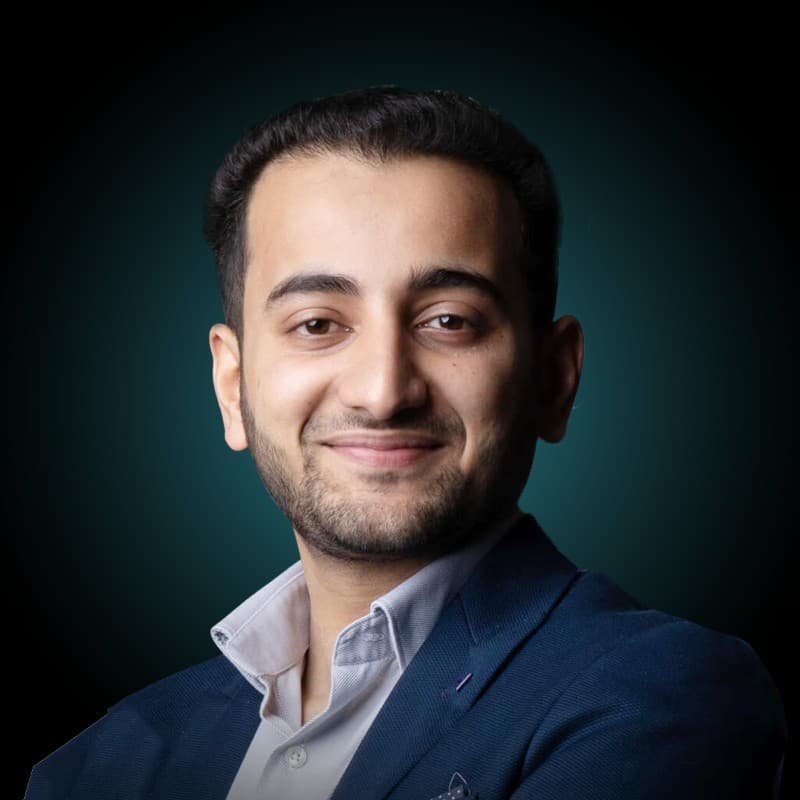
Bilal Shabandri, Co-founder and CEO of Let's Reach

Bilal Shabandri

Co-founder & CEO of Let's Reach · Co-founder of arcab

Cross-Business Operations

I run two completely different 6-7 figure businesses. A creative events agency for vintage cars, and an AI powered influencer marketing agency. The brand context, the customer profiles, the messaging, all of it sits in my head. Alistair didn't build any of that for me. What he did was set up the foundation that let me actually put it down somewhere and link it together.

Once the data layer was in place, I built the tools on top. Email and outbound engines, campaign management across both companies, copywriter, sales director, research agents and still building more. It works because the base is structured. The same brand context can be pulled into different campaigns across different businesses without me re-explaining myself every time.

He doesn't sell you software. He sets up the infrastructure under your knowledge so you can finally build with it. The expertise is yours. He just gives it a place to live, and that place is yours too.

Azeem Khalifa, CEO of EZ Car Events

Azeem Khalifa

CEO of EZ Car Events · Co-founder of Let's Reach

People first · starts with you

You can't put AI in your business
until you've run a week on it yourself.

Founder OS is how you do that. A folder of files that gives your AI your context. It adapts to your day, not the other way around.

When you're ready to put your team on it, that part is what we help with.

Frequently asked questions

It does not, directly. Founder OS is the foundation. It gives you your own second brain. Your context, your decisions, your week, all in one place your AI can read. You run on it yourself first to prove the model. The team-delivers-without-you outcome lives in the next layer, the one ARCAS gets paid to build on top of it. Founder OS is what has to exist before that step can stick.

Founder OS is free to ARCAS. Clone it from GitHub or download the zip with an email. We sell two things on top. Setting it up on your team's accounts so the install does not eat your week. And keeping the brain alive as the business changes, so your team is still using it six months in. If you install it yourself and never speak to us, that is a fine outcome. The OS is how the right partners find us.

Free to ARCAS, not free to Anthropic or OpenAI. Founder OS is a folder. To get the full lift, your AI needs to read that folder directly, which is what Claude Code (Anthropic) or Codex (OpenAI) do. Both are free desktop apps that require a paid plan at the AI provider, around USD 20 a month, the same plan you would pay for ChatGPT Plus or Claude Pro. Nothing of that comes to us. The regular ChatGPT or Claude.ai apps work too, with more daily friction. And because the folder lives on your machine, switching from Claude to Codex tomorrow is free.

Yes. Setup is a fifteen-minute conversation with your AI. It asks the questions and writes the files for you. Day to day you talk to your AI the same way you do today. No code. No terminal. The only thing you learn is how to ask better questions.

Three places, honest answer. Anything where the brain does not hold the context yet. First week of use, your AI will guess and sound confident doing it. Run /founder-os:status and the gaps surface, then you fill them. The hallucinations stop the same session. Second, anything judgment-heavy where the same question can come back two different ways. Pricing a deal, reading a hire, calling a client risk. We treat the AI as drafting, not deciding. The call is still yours. Third, anything that requires reading a person in the room. Body language, the team member who is unhappy and not saying it, the client who is about to leave. The brain captures patterns you already see. It does not see what you cannot see. Founders who treat the OS as a co-pilot get value. Founders who treat it as autopilot get burned.

Founder OS Day 1 is single-user. It holds your context, your decisions, your week, your network. When you need your team to read from the same brain, that is the next layer. We set the brain up on the accounts your team already uses, train one internal owner, and keep tuning it as the business changes. That is the paid engagement. The free version is where you prove the model on yourself before putting it in front of your team.

Honest answer. Founder OS Day 1 does not get you there. What it does Day 1 is stop you re-explaining yourself, stop decisions from disappearing, and start every conversation with your AI already knowing the week. The two-weeks-off outcome is what the team-layer engagement is built for. Founder OS is the foundation that has to exist before that step can stick.